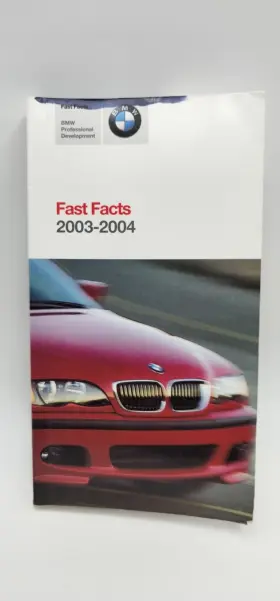
BMW University Facts Book 2003-4
fits make: Bmw.
( Manufacturer Part Number: 20034 )
Review BMW 2003 University Fast Facts Book Year
BMW 2003-2004 University Facts Book
The BMW 2003-2004 University Facts Book is an essential companion for students and enthusiasts of BMW vehicles produced during these years. This comprehensive guide offers a wealth of information about the BMW models released between 2003 and 2004, making it an indispensable resource for those seeking in-depth knowledge about these iconic vehicles.
The book begins by providing an overview of BMW as a company, its rich history, and its commitment to innovation and excellence in the automotive industry. This historical context sets the stage for a detailed exploration of the specific BMW models produced during the 2003-2004 period.
For each model, the book offers numerous facts and figures. These include specifications such as engine type, horsepower, torque, transmission options, and fuel economy. The book also includes information about dimensions, weights, and seating capacities. Additionally, it covers exterior and interior design features, as well as optional equipment and trim levels.
One of the most valuable aspects of the BMW 2003-2004 University Facts Book is its focus on the technical details of each model. It provides detailed information about the engines, including displacement, cylinder count, and fuel system. It also covers the suspension systems, brakes, and other key components, allowing readers to gain a deep understanding of how these vehicles function.
Another strength of the book is its coverage of the BMW models' performance capabilities. It includes data on acceleration, top speed, and handling, providing readers with a clear understanding of each model's dynamic qualities. It also discusses the various options and upgrades available for enhancing performance, such as sport suspensions and high-performance exhaust systems.
The BMW 2003-2004 University Facts Book is not just for technical enthusiasts, however. It also offers insights into the cultural significance of these vehicles. It discusses their popularity among students and young professionals during this period, as well as their role in popular culture and automotive trends.
In summary, the BMW 2003-2004 University Facts Book is an essential resource for anyone interested in the BMW vehicles produced during these years. It offers a wealth of detailed information about each model, from specifications and design features to performance capabilities and cultural significance. Whether you're a student, a collector, or simply a BMW enthusiast, this book is sure to provide you with valuable insights and knowledge.
BMW 3 Series (2003-2004): A Comprehensive Analysis of Pros, Cons, and Key University Facts
The BMW 3 Series, particularly the models produced between 2003 and 2004, is a popular choice for those seeking a refined, high-performance compact executive car. In this analysis, we will discuss the key features, advantages, disadvantages, and university facts to help potential buyers make an informed decision.
Pros:1. Dynamic Handling: BMW is renowned for its exceptional handling, and the 3 Series is no exception. Its balanced chassis and precise steering make it a joy to drive, especially on winding roads.
2. Powerful Engines: BMW offered a range of powerful yet fuel-efficient engines, including inline-6 and inline-4 options. These engines provided impressive performance and responsiveness.
3. High-Quality Interior: The interior of the BMW 3 Series is characterized by its luxurious materials, ergonomic design, and advanced technology features.
4. Safety: The 2003-2004 BMW 3 Series received high safety ratings, with standard features such as front and side airbags, anti-lock brakes, and stability control.
Cons:1. Maintenance Costs: BMWs are known for their high maintenance costs, and the 3 Series is no exception. Regular servicing and repairs can be expensive.
2. Limited Rear Seat Space: The 3 Series, like many compact executive cars, offers limited rear seat space. Taller passengers may find it uncomfortable.
3. Fuel Economy: Although the engines were fuel-efficient for their power output, the 3 Series still consumed more fuel than some competitors.
4. Complex Infotainment System: The iDrive infotainment system, while advanced, could be confusing for some users.
University Facts:1. Production Dates: The BMW 3 Series (E46) was produced from 1997 to 2005. The models discussed in this analysis were manufactured between 2003 and 2004.
2. Generations: This analysis focuses on the fifth generation of the BMW 3 Series.
3. Platform: The E46 3 Series was built on the E46 platform.
4. Body Styles: The BMW 3 Series was available in various body styles, including sedans, coupes, wagons, and convertibles.
Conclusion:The BMW 3 Series (2003-2004) offers an exhilarating driving experience, a luxurious interior, and impressive performance. However, it comes with higher maintenance costs, limited rear seat space, and average fuel economy. Ultimately, potential buyers should weigh these factors against the car's advantages and determine if the BMW 3 Series aligns with their needs and preferences.
Recommendation:If you're looking for a compact executive car with exceptional handling, a luxurious interior, and powerful engines, the BMW 3 Series (2003-2004) is an excellent choice. However, be prepared for higher maintenance costs and consider the limited rear seat space and average fuel economy before making your final decision.
Details:
Top of pages has a black marker slash See photo. Some normal creases and tiny scratches.
part #: 20034 prices
- $14.95-$368.00
specifications motoralph:
- for makes: Bmw
- mpn: 20034
shipping motoralph:
- transit: 5-10 Days
- type: Calculated
- cost: $6.09
- service: USPS Ground Advantage
- class: Standard
- carrier: USPS
general motoralph:
- condition: Used
- Motors > Parts Accessories > Other
payments motoralph:
- wallet: Paypal
- other
- credit card: Visa
offer motoralph:
- options: Ship-to-home
- best offers: True
- quantity: 1
- started: February 4, 2026
- availability: In Stock
- sold: 0
returns motoralph:
- paid by: Buyer
- policy: Returns Accepted
- time: 30 Days
seller motoralph:
- city: Bethlehem, Pennsylvania
- rating: 100.0%
- # reviews: 134
Bmw 20034 Is Similar To:
- Bmw 776795a816b9 100 Year R18 Welcome Package Just The Hat Book And Belt No Badges (18.2% similar) I bought this package just for the engine badges. I am selling the book which is a quite nice coffee table book, hat and belt, even white gloves. They are no longer in the kit...(November 24th, 2024)
- Bmw 84592 Tbc415 Group University Notebook Diary New Car Auto Motorcycle Motorrad (39.7% similar) Lined pages for taking notes with calendar at the end of book. Brand is eccl AIs / 84592 TBC415. Bmw group university journal / notebook with pen. Ships from 60611. New and unused, but there are some marks on the front back covers. Ships in a padded mailer. Size is approximately 8/3 /8...(March 24th, 2025)
